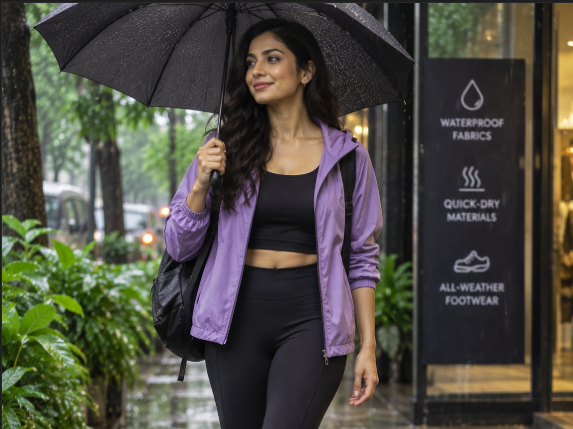
The most useful monsoon wardrobe in 2026 is becoming less about carrying an emergency umbrella and more about choosing clothes that are designed to cope with moisture from the start. Water-resistant jackets, quick-dry tops and trousers, moisture-managing activewear and rain-friendly footwear are moving into everyday wardrobes because they solve a simple rainy-season problem: people still want to look put together after the weather changes.
Recent Indian fashion guidance reflects that shift. Hindustan Times recommends quick-drying nylon-polyester blends, rayon, modal, light crepe and moisture-wicking fabrics for rainy-season wardrobes, while Moneycontrol similarly points to quick-drying materials and waterproof footwear as practical monsoon choices. The direction is clear: functionality is becoming part of the outfit rather than something added reluctantly on top of it.
Water-resistant and waterproof are not the same thing
The language on a jacket label matters. A water-resistant garment is generally designed to handle light rain or brief exposure to moisture, but it should not automatically be expected to keep the wearer dry through a sustained downpour. Waterproof outerwear is intended to provide a higher level of protection, although its real performance also depends on construction details such as seams, closures and the material used.
This distinction is useful when shopping for a city monsoon. Someone who mainly moves between a car, metro station, office and café may be well served by a lightweight water-resistant shell that packs into a bag. A person who walks or rides through heavy rain needs more substantial protection. Technical rain-jacket guidance consistently emphasises waterproofing, breathability and seam construction rather than treating the outer fabric alone as the entire solution.
Style no longer needs to disappear in either case. Contemporary rain shells can be cropped, softly oversized or cut like a minimal windbreaker, making them easier to wear with trousers, leggings, dresses and co-ord sets. Neutral black, navy and olive remain practical, but brighter lavender, red, yellow and green outer layers can turn the jacket itself into the focal point of a rainy-day outfit.
Why quick-dry fabrics matter beyond activewear
Quick-dry materials have long been familiar in sportswear, but their usefulness extends well beyond the gym. A fabric that releases moisture relatively quickly can make a commute more comfortable after a sudden shower and can reduce the amount of time a garment remains damp in humid conditions. That is particularly useful for trousers, tops and travel clothing that may need to be worn for several hours after exposure to rain.
An August 2026 Times of India fashion feature highlighted polyester blends, linen, rayon, crepe, georgette and cotton blends among useful quick-drying or monsoon-friendly options for working women. The fabrics do not all behave identically, so shoppers should avoid assuming that every garment made from a particular fibre will perform the same way. Fabric weight, weave, blend percentage and finishing can all change drying time and comfort.
Synthetic fibres such as polyester and nylon are common in performance garments because they generally absorb less water than highly absorbent natural fibres. Blends can offer a compromise, combining some of the hand feel or breathability associated with other fibres with faster moisture release. Jockey India also notes the importance of breathable, moisture-managing and quick-drying materials when dressing for high humidity and sudden showers.
Activewear is becoming an everyday monsoon shortcut
The growth of athleisure has made performance fabric easier to integrate into ordinary outfits. Quick-dry leggings, tapered joggers, lightweight T-shirts and sports-inspired tops can move from a morning workout into errands or a casual commute without looking like specialised rain gear. Add a clean water-resistant jacket, structured tote or backpack and simple sneakers, and the result can feel intentional rather than purely functional.
The most effective pieces are those that manage both rain and humidity. A jacket that blocks water but traps too much body heat can become uncomfortable quickly, especially in warm cities. Likewise, a very tight quick-dry top may technically manage moisture but still feel unpleasant in humid weather. Light layers and enough room for airflow usually make a more adaptable combination.
For office dressing, performance fabrics can be used more discreetly. A lightweight synthetic-blend blouse with ankle trousers can look conventional while drying more quickly than heavier clothing. A packable shell can remain in a work bag until needed. This approach keeps the technical elements subtle while still preparing the outfit for an unpredictable commute.
Footwear may be the most important monsoon purchase
Even a carefully chosen outfit becomes difficult if the shoes remain soaked for the rest of the day. Rain-ready footwear therefore deserves the same attention as fabrics. Waterproof or water-friendly uppers can reduce water penetration, while soles with reliable wet-surface grip are important on slick pavements and tiled entrances.
Rubber and other water-tolerant materials are easier to clean after muddy splashes than suede or delicate leather finishes. Closed shoes can provide more coverage in dirty street water, but they also need to dry efficiently if moisture enters from above. Sandals and clogs may release water quickly but expose the feet more directly to puddles and debris. The best choice depends on the commute rather than appearance alone.
Grip should not be overlooked. A shoe marketed as waterproof is not necessarily slip-resistant, and those are separate performance characteristics. Shoppers should inspect the outsole pattern and manufacturer information instead of assuming that rain protection automatically means good traction.
Build the outfit around rain, not just the raincoat
Monsoon practicality also comes from silhouette. Hindustan Times recommends manageable dress and skirt lengths and lighter water-resistant cover-ups, while contemporary rainy-season styling guides frequently warn against long hems that can drag through puddles. Ankle-length trousers, midi dresses, tapered joggers and shorter skirts are easier to keep away from wet pavement.
Colour and print can help as well. Mid-tones, darker colours and patterns tend to make small splash marks less conspicuous than very pale solid trousers. Light-coloured fabrics can also become more transparent when wet, making opacity and lining worth checking before purchase. These are small details in a fitting room but significant ones during an unexpected downpour.
Bags deserve similar consideration. A water-resistant backpack or coated tote can protect a phone, wallet and other daily essentials better than an absorbent fabric bag. For electronics, however, a water-resistant bag should not automatically be treated as fully waterproof; an internal protective pouch can provide an additional layer of security.
What to check before buying technical monsoon clothing
Marketing terminology can make performance clothing sound more capable than it really is. Before purchasing, check whether the brand describes an item as water-repellent, water-resistant or waterproof and whether it provides any technical testing information. For serious rain protection, details such as sealed or taped seams, protected zippers, an adjustable hood and adequate coverage can matter as much as the headline fabric.
For quick-dry clothing, consider how the garment will actually be used. A lightweight gym top and an office trouser have different requirements even if both advertise moisture management. Comfort against the skin, opacity when wet, stretch, odour retention and care instructions can determine whether a technical fabric becomes a favourite or stays at the back of the wardrobe.
The most convincing monsoon fashion trend of 2026 is therefore not a particular colour or silhouette. It is the idea that performance and everyday style can occupy the same garment. A lightweight rain shell can look polished, quick-dry trousers can work outside the gym, and weather-friendly footwear can be chosen for design as well as protection. For women trying to stay stylish through unpredictable rain, the practical wardrobe is no longer the compromise. Increasingly, it is the look itself.