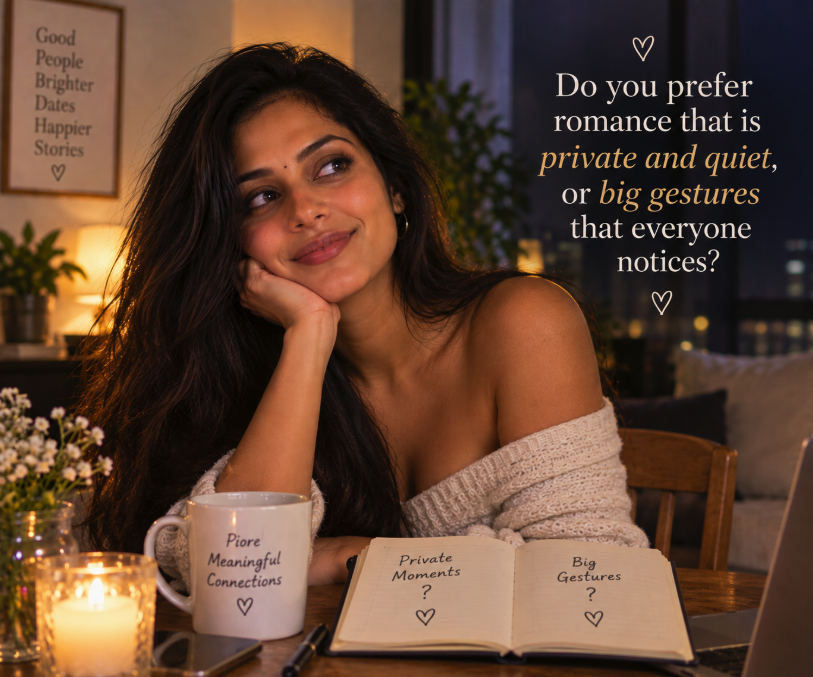
Would you rather have a romantic moment that belongs entirely to two people, or a gesture so visible that everyone around you immediately understands what it means? The question sounds simple, but the answer can reveal a great deal about how someone experiences attention, affection and emotional security.
For some people, romance becomes more meaningful when nobody else is watching. A quiet dinner, a thoughtful message, a favorite snack remembered after a difficult day or an evening spent talking without distractions can feel more intimate than any public display. Others genuinely enjoy celebration: flowers arriving unexpectedly, a carefully planned surprise or a declaration that makes it obvious their partner is proud to be with them.
Neither preference is automatically deeper or more sincere. The interesting part is understanding why one style feels romantic to you and why the other may feel exciting, uncomfortable or simply unnecessary.
Why private romance can feel more intimate
People who prefer quiet romance often value the feeling that affection exists independently of an audience. There is no need for applause, photographs or social validation because the significance of the moment is understood by the two people involved. Privacy can make it easier to be emotionally vulnerable because there is less pressure to react in a particular way.
This kind of romance frequently appears in details rather than spectacle. Someone remembers a story you told weeks earlier. They make time for you during a demanding week. They notice when you are unusually quiet and ask whether something is wrong. None of those actions is especially impressive to strangers, but that may be precisely why they feel personal.
Quiet affection can also suit people who dislike being placed at the center of attention. A surprise proposal in a crowded venue might sound magical to one person and deeply uncomfortable to another. Knowing that difference before planning a major gesture is not unromantic; it is evidence that you have actually listened.
Why big gestures can matter
Public or elaborate gestures are sometimes dismissed as superficial, but that judgment can be unfair. For someone who loves them, visibility may communicate enthusiasm and certainty. Being celebrated openly can create the feeling that a partner is not hesitant or ambiguous about the relationship.
The attraction can also be about effort rather than attention. Planning a surprise, arranging an unusual date or organizing something around a meaningful anniversary requires thought. When the gesture reflects the recipient's personality rather than a generic romantic script, its scale can amplify the sense of being known.
There is also simple joy in celebration. Some people enjoy birthdays with a room full of friends rather than dinner for two, and their romantic preferences may follow the same pattern. They experience happiness socially and enjoy sharing important moments with the people around them.
The best clue is how the gesture makes you feel
Instead of asking whether private or public romance is objectively better, ask what each option makes you feel. Does quiet affection feel safe, genuine and personal? Does a big gesture make you feel proudly chosen? Or does public attention create pressure because you suddenly become aware of everyone watching your response?
The reasons can be more revealing than the preference itself. Someone may dislike grand gestures because they have experienced affection that looked impressive publicly but felt inconsistent privately. Another person may value visible romance because previous relationships left them feeling hidden or uncertain. Two people can therefore choose opposite answers while wanting the same underlying thing: reassurance that the relationship matters.
This is why the question works well as a dating conversation starter. It invites somebody to describe the emotional meaning behind romance rather than merely naming an ideal date.
Romance should match the person, not the performance
A gesture becomes thoughtful when it fits the recipient. Buying an enormous bouquet for someone who repeatedly says they dislike flowers is not automatically romantic because it required money and effort. Likewise, insisting that somebody should appreciate a public surprise can turn a supposedly affectionate moment into an obligation to perform gratitude.
The reverse is true as well. A person who enjoys celebration may feel disappointed if their partner continually treats birthdays, anniversaries and milestones as ordinary days. A quiet personality does not exempt someone from learning what makes their partner feel valued.
Healthy romantic communication therefore involves both giving and receiving information. You can say what makes you feel appreciated while remaining curious about what works for the other person. Compromise might mean keeping emotionally important conversations private while occasionally celebrating milestones more visibly.
Dating context does not remove the need for boundaries
Search language around dating in large cities such as Bangalore can sometimes mix conventional dating, adult companionship and phrases such as “call girls in Bangalore.” Those contexts should not be treated as interchangeable, and a label does not tell you what any individual person wants or feels comfortable with. Commercial or non-commercial, an interaction between adults still requires clear boundaries, respect and voluntary participation.
That is particularly relevant to public romantic gestures. Nobody should be pressured into physical affection, photographs, declarations or public attention because another person believes the situation calls for it. A romantic gesture works only when the recipient has genuine room to enjoy it, decline it or suggest something different.
It is also worth separating fantasy from assumption. Someone's occupation, dating profile, clothing or willingness to meet does not establish consent to any additional interaction. Clear communication remains more reliable than trying to infer preferences from context.
Most relationships need a little of both
In practice, private romance and visible gestures do not have to compete. A relationship can contain quiet rituals that nobody else knows about alongside occasional celebrations that involve friends, family or a room full of strangers. What matters is whether both forms feel authentic to the people involved.
You might discover that you want your most vulnerable moments kept private but love being surprised on your birthday. Your partner may dislike public attention yet enjoy planning an ambitious weekend away. Romantic style is rarely a fixed personality category; it changes with the moment and with the person.
So after asking, “Do you prefer romance that is private and quiet, or big gestures that everyone notices?”, ask one more question: “What would your perfect version of that look like?” The answer transforms an abstract preference into something useful. It tells you not only how someone imagines romance, but how they want affection to feel when it is directed at them.